
Many homeowners across New Jersey Counties discover attic mold during a roof repair, real estate transaction, or seasonal inspection.
Attics in New Jersey face wide temperature swings, coastal humidity, and storm-driven rain, creating ideal conditions for mold growth when ventilation or insulation falls short.
Mold removal requires more than cleaning visible mold growth. Long-term success comes from addressing moisture sources, improving airflow, and upgrading insulation that no longer performs as it should.
Understanding Mold in Your Attic
Mold problems in attics often form quietly. Mold spores move through the air constantly, and once moisture meets organic material such as roof sheathing or wood surfaces, mold starts colonizing. Mold in your attic thrives when the attic space traps moist air. Inadequate ventilation, wet insulation, or active roof leaks create the perfect storm for growth.
Attic mold does not stay confined to one corner. Spores drift into living areas, raising the risk of allergic reactions and indoor air quality issues. Prompt action protects structural materials, stops spreading into walls or drywall, and prevents higher cost repairs.
Common Causes of Attic Mold in New Jersey Homes
Several factors contribute to mold growth in New Jersey attics. The following issues are the ones our team finds most often during attic inspections across the Jersey Shore.
Roof leaks
Storms, missing shingles, ice dams, and aged roofing allow rainwater to enter. Even a slow drip introduces moisture into insulation and wood materials. Ongoing leaks saturate surfaces, creating damp pockets that breed mold. Many homeowners do not notice these leaks from below, since the water damage stays hidden in the attic.
Inadequate ventilation
Attic ventilation works through a simple system. Soffit vents pull in fresh air, while ridge vents expel warm, moist air. When soffit vents are blocked or ridge vents fail to provide adequate ventilation, moisture becomes trapped. These attic conditions raise humidity levels, creating condensation on wood surfaces and roof sheathing. During winter, this trapped moisture turns into frost buildup. Once it melts, the attic never has a chance to dry completely.
Improper exhaust fan setup
Kitchen exhaust fans and bathroom exhaust fans should push air outside. In older homes across Monmouth and Ocean Counties, these fans often terminate inside the attic. Dumping moist air into the attic space introduces moisture directly onto cold surfaces, accelerating mold growth.
Insulation issues
Insulation that is compacted, saturated, or poorly installed traps moisture and stops airflow.
Wet insulation stays damp for long periods, feeding existing mold. Old insulation also blocks soffit vents, preventing the attic from breathing.
Entry points for moist air
Gaps around recessed lights, access doors, and utility penetrations leak warm, moist household air into the attic.
This warm air meets cold winter surfaces, creating condensation and fueling mold growth.
Attic Mold Inspection and Assessment
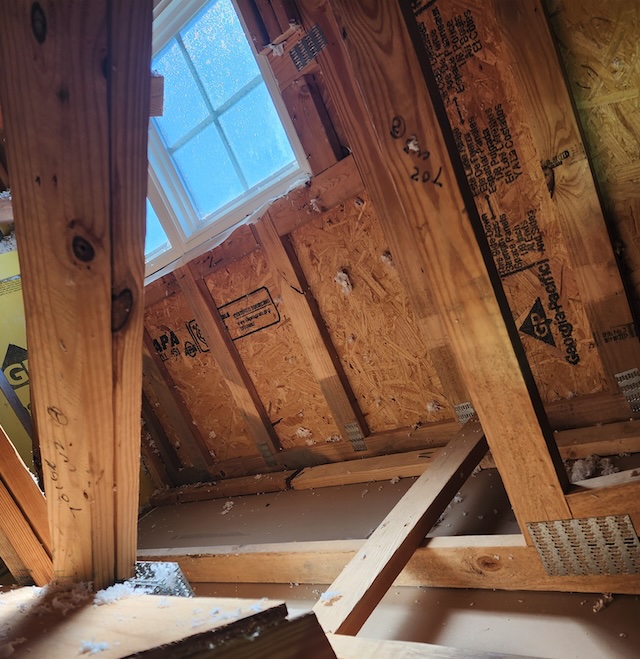
Attic mold removal begins with a detailed inspection. Our certified technicians inspect roof surfaces, soffit vents, insulation depth, and ventilation patterns. The assessment includes locating leaks, testing humidity levels, and documenting visible mold growth. The affected area is measured carefully to determine containment strategies and the scope of work needed for safe, thorough mold removal.
During the inspection phase, our team identifies all moisture sources that introduced or sustained the mold issue. Mold remediation only succeeds when those problems are addressed completely.
Professional Attic Mold Removal in New Jersey
Effective attic mold remediation begins with isolating the workspace. Containment barriers keep mold spores from drifting into living areas while cleanup is underway. Once the area is secured, technicians clean wood sheathing and framing with tools and methods approved under EPA and IICRC standards. HEPA vacuuming follows to capture loose spores and debris, preparing surfaces for deeper treatment.

After the initial cleaning, the crew performs thorough mold removal using specialized agents and controlled agitation to reduce staining and lower spore counts across the affected area.
Drying is essential at this stage. Industrial air movers and dehumidifiers restore stable attic conditions so insulation upgrades and ventilation improvements can proceed without trapping moisture.
When all work is complete, clearance testing verifies that the attic is dry, safe, and fully remediated.
Before and After Results
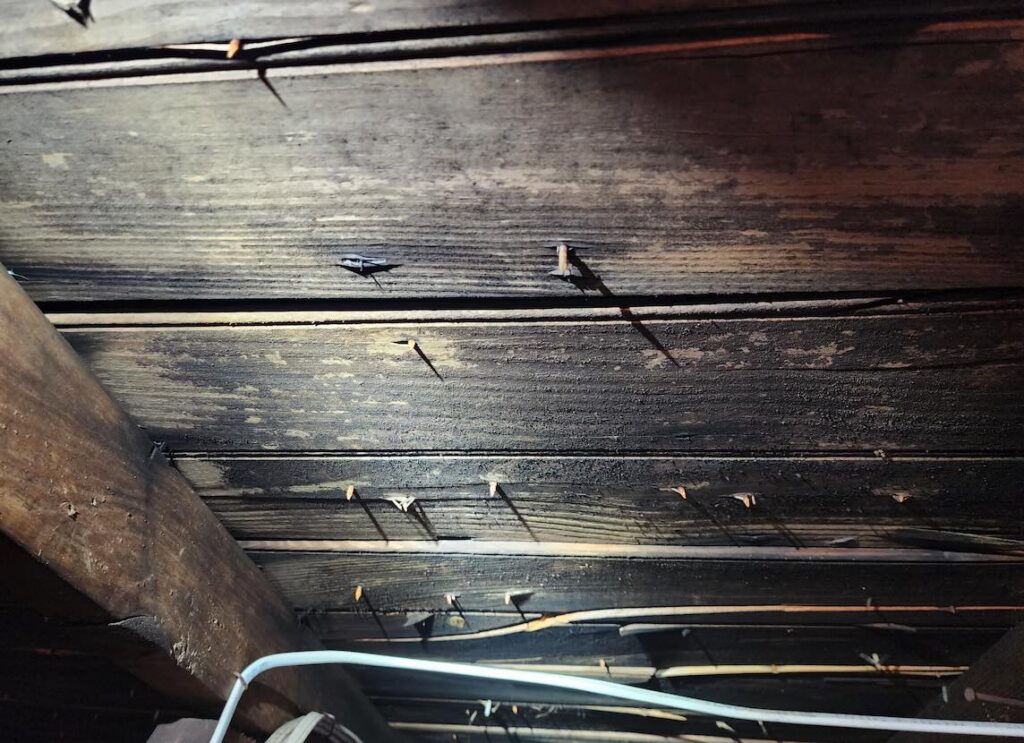
Attics dealing with mold often show dark staining, saturated insulation, rusted fasteners, musty odors, and signs of condensation. Some spaces include black mold across roof sheathing or wood framing, along with frost buildup or blocked airflow around soffits.
After remediation, the transformation is noticeable. Surfaces appear clean, moisture levels stabilize, and the attic returns to a functional part of the home. Ventilation paths open again, insulation performs correctly, and moisture sources are eliminated so future mold does not gain a foothold.
Ventilation and Moisture Control Upgrades
Ventilation improvements protect the attic long-term. Ridge vents release warm, moist air at the roof peak, while open soffit vents pull in cooler outdoor air to keep the attic well ventilated. Redirecting kitchen and bathroom fans outdoors prevents moist household air from entering the attic space. Air sealing around light fixtures, utility lines, and access doors also limits warm interior air from creating condensation on cold surfaces.
Insulation upgrades support these improvements by maintaining even temperatures and reducing damp pockets that feed mold. Dense-packed insulation and correctly installed baffles keep airflow consistent and soffits clear.
Ongoing Maintenance and Inspections
Routine inspections help identify early warning signs such as minor leaks, blocked vents, or shifting humidity levels. Homeowners across the Jersey Shore region benefit from checking the attic after severe storms, heavy rainfall, or seasonal temperature changes. Quick action prevents structural damage, controls remediation cost, and stops mold from spreading into walls or living spaces.
Why New Jersey Homeowners Trust MasterTech Environmental Jersey Shore
Our company specializes in attic mold removal for homes across Monmouth, Ocean, Cumberland, Atlantic, and Cape May Counties. We follow strict industry guidelines, identify moisture sources with precision, and complete remediation in a safe and controlled manner. Every project includes containment, HEPA cleaning, and protective measures that stop mold from spreading into living areas. Learn more about the importance of professional mold removal services for protecting your home and health.
Your attic should remain dry, clean, and structurally sound. When mold appears, professional mold removal restores the space and prevents future mold growth. Ventilation improvements and insulation upgrades ensure the problem does not return.
For certified attic mold remediation, ventilation repairs, and insulation upgrades anywhere across the Jersey Shore region, contact MasterTech Environmental Jersey Shore. Our team provides prompt inspections, clear explanations, and reliable service backed by years of experience in New Jersey’s unique climate.