Mold problems are taken seriously across New Jersey’s Shore communities. Properties in Monmouth, Ocean, Atlantic, Cumberland, and Cape May Counties are especially vulnerable to moisture intrusion and mold growth.
Coastal humidity, plumbing leaks, and water damage create ideal conditions for mold to develop inside walls, insulation, ceiling tiles, drywall, carpet, and flooring.
At MasterTech Environmental Jersey Shore, a structured, certified 12-step mold remediation process is followed on every project. Homeowners, landlords, and property managers across the Jersey Shore trust our team to handle mold removal safely, thoroughly, and professionally.
Why a Defined Mold Remediation Process Matters
Mold remediation is not a simple cleaning task. Mold spores are not always visible to the naked eye. A musty odor is often the first sign that a mold problem exists inside a property. Left unaddressed, mold exposure can lead to serious health problems, particularly for individuals with respiratory conditions.
Improper mold cleanup can spread airborne mold spores to unaffected areas of a property. Attempts to remove mold using bleach or paint are not considered effective remediation by the Environmental Protection Agency. A certified mold remediation contractor follows a defined process to eliminate mold at its source and prevent future mold growth.
Understanding the Scope of Mold Damage
Before remediation efforts begin, the full extent of mold damage must be identified. Mold growth is commonly found in attics, basements, crawl spaces, and inside walls following water damage or plumbing leaks. In commercial buildings, mold is frequently discovered behind ceiling tiles, inside HVAC systems, and within porous materials throughout the affected area.
A thorough mold inspection and testing is conducted to locate the mold source and assess moisture levels across the entire space. Moisture readings are taken throughout the contaminated area to ensure all problem zones are identified before work begins.
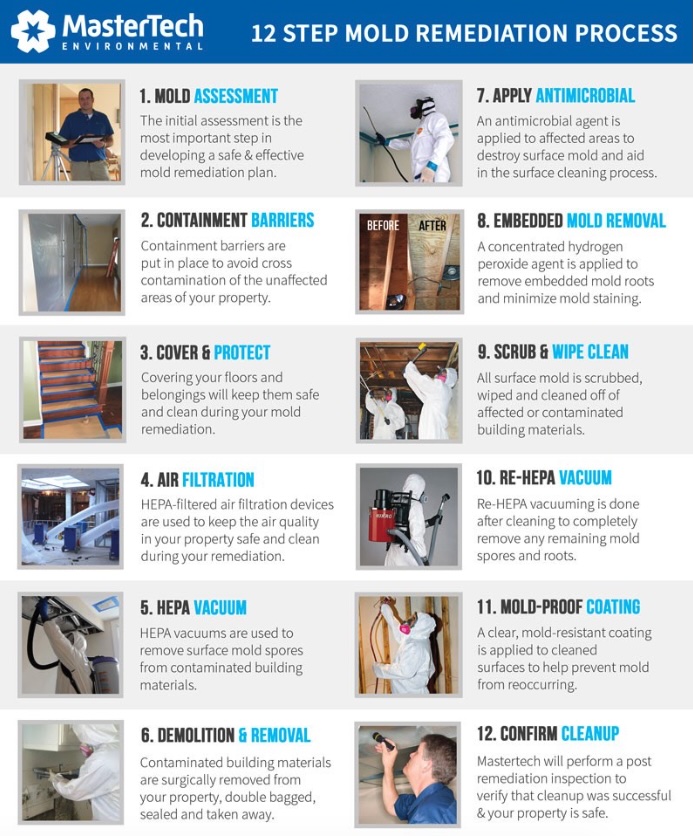
MasterTech’s 12-Step Mold Remediation Process
Step 1: Mold Assessment
Every mold remediation project begins with a comprehensive assessment. The scope of contamination is identified and a safe, effective mold inspection and evaluation plan is developed from that inspection.
Step 2: Containment Barriers
Physical barriers are installed to isolate the contaminated area from the rest of the property. The containment area is sealed to prevent mold spores from spreading to other areas during the cleanup process.
Step 3: Cover and Protect
Floors, windows, and belongings are covered and protected before remediation begins. This precaution keeps unaffected surfaces and materials safe throughout the process.
Step 4: Air Filtration
Air filtration devices are placed throughout the work area. HEPA air scrubbers are used to maintain negative air pressure inside the containment area. Negative air prevents airborne mold spores from migrating to other areas of the property during remediation, which is a key part of our 12-step mold remediation process in New Jersey.
Step 5: HEPA Vacuum
Surface mold spores are removed from exposed building materials using a HEPA vacuum. This step reduces spore counts on surfaces before deeper cleaning begins.
Step 6: Demolition and Removal
Contaminated building materials are carefully removed from the property. Affected drywall, insulation, ceiling tiles, carpet, and flooring are double-bagged, sealed, and disposed of properly offsite as part of our broader mold removal and remediation services across the Jersey Shore. Removing mold-damaged materials is a critical step in the overall restoration process.
Step 7: Apply Antimicrobial
An antimicrobial agent is applied to all surfaces within the affected area. Surface mold is destroyed and the area is prepared for the next phase of the cleaning process.
Step 8: Embedded Mold Removal
A concentrated hydrogen peroxide agent is applied to affected materials. Embedded mold roots are broken down at this stage, and mold staining is minimized across exposed surfaces, underscoring the value of hiring certified mold removal experts in Monmouth and Ocean Counties.
Step 9: Scrub and Wipe Clean
All affected surfaces are scrubbed and wiped thoroughly clean. No residual mold is left behind on treated building materials following this step.
Step 10: Re-HEPA Vacuum
A second round of HEPA vacuuming is completed after all cleaning is finished. Any remaining mold spores, dust, and debris are captured and removed from the containment area.
Step 11: Mold-Proof Coating
A clear, mold-resistant coating is applied to cleaned surfaces throughout the affected area. This protective layer is designed to prevent future infestations and support long-term prevention of future mold growth.
Step 12: Confirm Cleanup
A post-remediation inspection is performed to verify the work. Air quality testing is conducted to confirm that airborne mold spore levels have returned to normal. Your property is confirmed safe before our team leaves the job site.
Health Effects of Mold Exposure
Mold exposure is associated with a range of health effects, including respiratory irritation, allergic reactions, and worsening asthma symptoms. Black mold, in particular, has been linked to more serious health problems with prolonged exposure. Addressing a mold problem promptly is important for protecting the health of occupants inside any residential or commercial building, making professional mold and biohazard remediation services in Central Jersey an important resource.
Serving Property Owners Across the Jersey Shore
This process is applied consistently across every mold and biohazard cleanup project in Monmouth and Ocean Counties, as well as mold remediation projects in Monmouth County, Ocean County, Atlantic County, Cumberland County, and Cape May County. From a single-family home in Freehold to a rental property in Wildwood or a commercial building in Atlantic City, every job is held to the same certified standard.
Remediation is typically completed within three to four days. Full containment and air filtration are maintained throughout the entire restoration process, and our certified remediation team serving Ocean and Monmouth Counties follows strict safety and quality standards.