
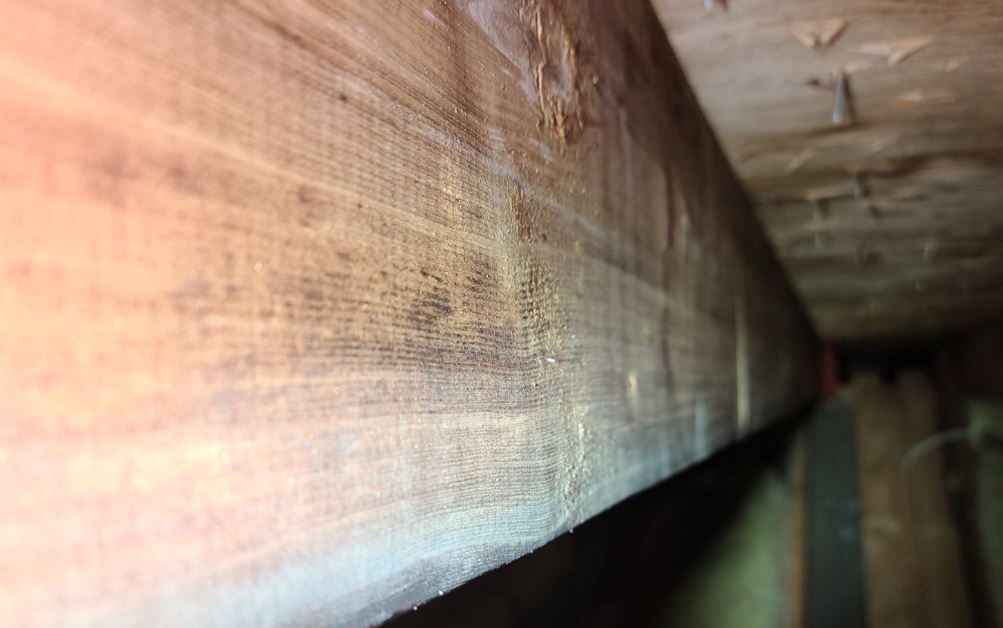
Detecting the presence of mold in your New Jersey home is the first step to effectively remove mold from attic spaces. Here are some tips for how to spot mold in the attic.
Most people only climb into the attic a few times a year. Meanwhile, trapped moisture, darkness, and poor airflow give mold a quiet place to grow.
Attic mold rarely stays put. Spores can drift into living areas through gaps, ducts, and the attic hatch. Left alone, mold also weakens roof sheathing and framing over time.
MasterTech Environmental Jersey Shore has removed attic mold for local homeowners since 2017. We start with an inspection, find the moisture source, and explain what we see before any work begins. Our remediation is backed by a 5-Year Mold Free Warranty.
Understanding Attic Mold
Attic mold is a common problem in many homes, especially in areas with high humidity and poor ventilation. It can grow on various surfaces, including attic sheathing, roof sheathing, and insulation. Mold growth in the attic can be caused by roof leaks, condensation, and poor ventilation. Understanding the causes of attic mold is essential to prevent its growth and remove it effectively.
Attic mold can cause various health issues, including allergies, respiratory problems, and skin irritation. It can also damage the structural integrity of the roof and attic, leading to costly repairs. Therefore, it is crucial to address attic mold growth promptly and effectively.
Do you think The Attic In your New Jersey Home or Business has mold?
Here are some signs to look for:
Look For Spots of Discoloration
Start by looking for colored spots on the roof sheathing, rafters, and insulation. Your own visual check is one of the simplest first steps.
Gray, green, and black growth is common on attic sheathing. Color alone cannot tell you which species you have or how risky it is. Only testing can identify the type. Either way, widespread growth should be inspected by a professional.
Humidity
There’s a significant probability that you could have mold in your attic if you’ve recently experienced water damage from a storm or have noticed a leak coming from upstairs.
Mold is a fungus, thus it doesn’t require light to grow. However, it does require oxygen and water. Therefore, there is a chance that mold will grow near any source of constant moisture in your house.
Finding a long-term solution, not just a band-aid, for any leaks you discover in your attic is crucial. When the conditions are unfavorable for future growth, mold has the ability to go dormant. So if it’s exposed to light or has dried out significantly, or if you scrub it off of the surface of where you find it, it may stop growing for a while, but it doesn’t die. It could then reactivate in the future.
If the source of the moisture in your attic isn’t removed, there’s a potential that the mold will return quickly if more water is discovered. You may get back on track to having a healthy home by repairing leaks or water damage and hiring a professional to remove any residual mold.
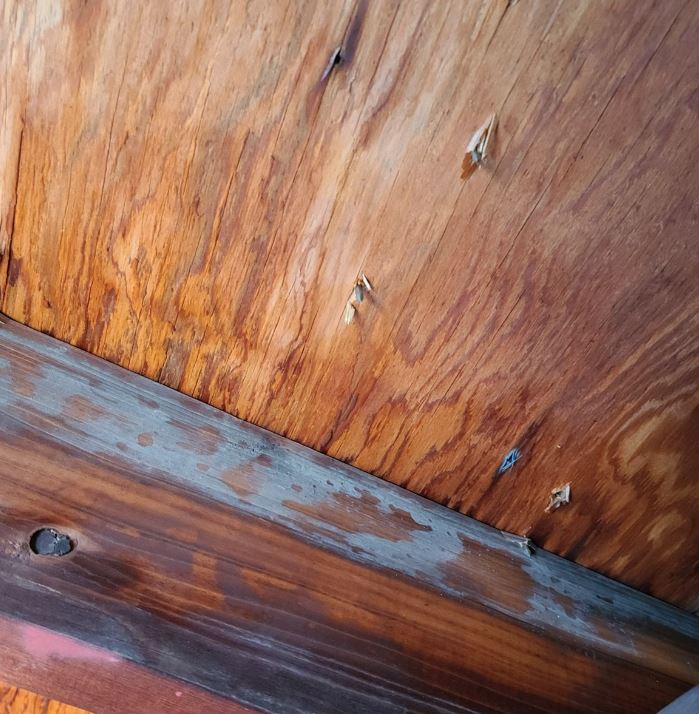
Call 732-716-2384 or Contact Us Now for a Mold Inspection and a Quote for Attic Mold Removal in New Jersey
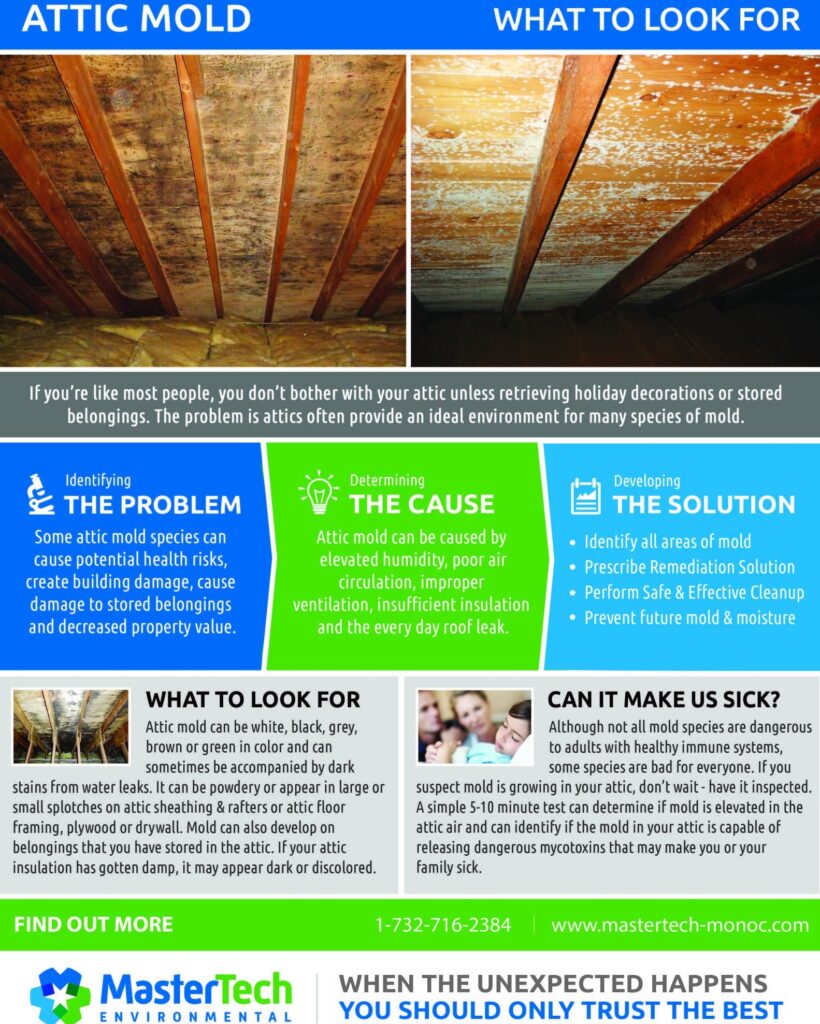
Search for patterns and shapes
On wooden surfaces, mold typically appears as large, ugly splotches that come in a variety of colors including white, grey and green. Since we rarely visit our attics or move things around up there, the environment can go undisturbed for some time. You may even have minor leaks from the roof or pipes and you may not discover them for a while.
Pay attention to growth that follows a clear line or pattern. Staining along nail rows, rafters, or the roof peak usually points to condensation. A patch below a vent or chimney often points to a leak. Either pattern tells us where the moisture is coming from.
Disgusting odors
This one can be challenging to recognize as mold.
Mold frequently emits an unpleasant odor that smells dirty and musty. Some people might even think it smells like urine, which is actually a common complaint.
Due to rising heated air and undisturbed dust that settles for months at a time, attics unfortunately also have a stuffy, stale scent to them.
But it’s that damp smell that is the one to look out for. There are many mold species that smell kind of like wet newspaper.
If you do detect a musty or wet odor in your attic, search for other indications that mold might be growing. This is particularly important if you find moisture in your attic because water by itself doesn’t smell as bad as mold does.
Health Problems
Mold in the home can trigger symptoms in some people, especially those with allergies or asthma. Common complaints include:
- coughing or wheezing
- a stuffy or runny nose
- itchy, watery eyes
- throat irritation
- skin irritation
These symptoms overlap with colds and seasonal allergies. If they seem worse at home and ease when you leave, mold is worth ruling out. A doctor can help sort out the medical side. We can test the air and find the source.
Finding Mold Is Just The Beginning
The next step after discovering the mold is to make sure that it is removed fast and by experienced professional mold removal specialists so that you and your family may breathe safely inside your home.
The remediation (mold removal, clean-up, and abatement) of the mold fungi will be determined by the actual type of mold that’s growing in your attic. The affected air quality will be restored as well once the source of the moisture has been addressed.
Personal Protection
To guard against contamination, the attic mold remediation contractor should wear personal protective equipment (PPE). The home’s inhabitants and currently unaffected areas should be protected from exposure at all costs throughout restoration using effective mold containment strategies.
During remediation, all impacted locations must be kept under control. The containment should be built using at least 6-mil-thick polyethylene sheathing, with a “zipper” confinement being the preferable design. Until a post-remediation report is generated demonstrating that the remediation effort has effectively solved the problem, containment should remain in place. Except for the remediation contractors or the indoor air quality specialist, no one else should enter or even touch a containment without express permission.
Material Handling
If any moldy or damaged materials from the remediation effort are to be moved through “clean” areas before disposal, they must be sealed in 6-mil polyethylene bags.
Hard, Semi Porous Materials and Porous Surfaces
Surfaces like steel studs or joists, hard, unlined HVAC ducts, concrete, glass, or plastic. An EPA-registered disinfectant and mold killer is used to remove the mold.
Wood goods like paneling, furniture, and wood studs or joists are examples of semi-porous materials. The material can be wire-brushed to remove any apparent mold and/or bacteria, cleaned and coated with an EPA-registered coating that resists mold if the structural integrity of the material has not been damaged and access to the area can be provided for proper treatment. Removal of the material is required to ensure cleanup if the structure is damaged or if sufficient access cannot be acquired.
Gypsum drywall, boxes, paper goods like newspapers and books, cabinets, carpeting, OSB, soft furniture, or other particle-board are examples of porous surfaces. It is always preferable to replace the damaged material rather than keeping it around. HEPA vacuuming and cleaning are probably only a temporary fix.
All the affected framing should be wire-brushed or sanded, and all exposed framing should be cleaned in accordance with the directions above. To the framing and roof decking, apply EPA-registered Mold Resistant Coating. If the work area is too challenging to sand or wire brush, an advanced abrasion technique could be applied.
Specialists in attic mold removal have expertise and understanding in the field. They are aware of the precise corners and edges to search around. While DIY can be effective in some cases, hiring a professional will only improve the condition of your attic and keep your family safe from exposure. It is advisable to bring in expert services because they are well-equipped and know which products and mold removal methods are suitable for your attic. They follow a thorough procedure, which will protect you from the risks associated with mold removal and exposure to mold spores.
Common Causes of Attic Mold in Jersey Shore Homes
Attics here deal with coastal humidity, wind-driven rain, and big temperature swings. When ventilation or insulation falls short, those conditions add up to mold. These are the causes our team finds most often.
Roof leaks
Missing shingles, aging roofs, and ice dams let water in. Even a slow drip keeps wood and insulation damp. Many leaks go unnoticed because the damage stays hidden above the ceiling.
Blocked or missing ventilation
Soffit vents pull fresh air in, and ridge vents let warm, moist air out. When insulation blocks the soffits or the ridge vent fails, moisture gets trapped. That moisture condenses on cold sheathing, and in winter it can turn to frost.
Bathroom and kitchen fans venting into the attic
These fans should push air outside. In many older homes in Ocean and Monmouth Counties, they end inside the attic instead. Every shower then sends warm, wet air straight onto cold wood.
Wet or compacted insulation
Insulation that gets wet stays damp for a long time and feeds mold. Old, compacted insulation can also cover the soffits and stop airflow. In most cases, moldy insulation needs to be removed and replaced.
Air leaks from the living space
Gaps around recessed lights, the attic hatch, and pipes let warm household air rise into the attic. When it meets cold surfaces, it condenses and fuels growth.
Protocol for Attic Mold Remediation
- All water (moisture) invasions must be fixed.
- Build suitable containment at the attic entrance.
- Clean, store, or remove all items from the impacted area
- During remediation, keep the relative humidity in the work area at 50% or lower.
- Fix or replace framing that has water damage
Preventing Future Mold Growth
Removing the mold is only half the job. The attic also has to stay dry. Depending on what the inspection finds, that can mean:
- clearing blocked soffit vents and adding baffles
- repairing or adding ridge or roof vents
- rerouting bathroom and kitchen fans outdoors
- sealing gaps around lights, pipes, and the attic hatch
- replacing wet or compacted insulation
After that, check the attic after major storms and at the change of seasons. Catching a small leak early keeps a small problem from turning into a big one.
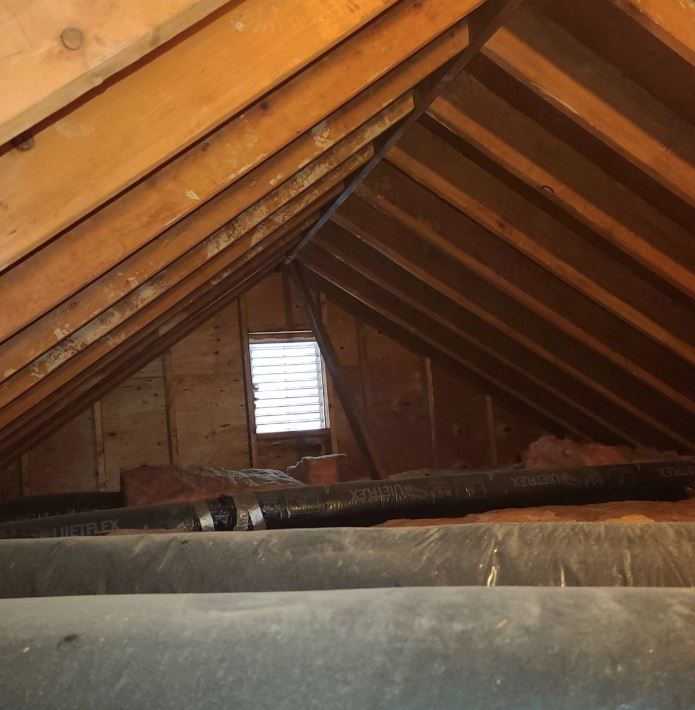
Why pick MasterTech to remove mold in your New Jersey Attic?
You need more than a quick spray to fix attic mold. We start with a mold inspection to find how far the growth has spread and what caused it.
From there, our team handles the full job:
- building containment at the attic entrance so spores stay out of your living space
- running negative air and HEPA filtration during the work
- cleaning or removing affected wood and insulation
- treating cleaned framing and sheathing
- pointing out the moisture fixes the attic needs so the mold stays gone
We explain each step as we go, so you always know what is happening in your attic. Every remediation is backed by our 5-Year Mold Free Warranty. We serve homeowners across the Jersey Shore, including Atlantic County.
Importance of Professional Remediation
Small spots of surface mold can sometimes be handled by a homeowner. Larger areas, wet insulation, or growth across the roof deck call for professional remediation. Disturbing heavy growth without containment can spread spores through the house.
When you compare companies, ask for a written scope of work. Ask what causes they found, what will be removed, and how the work is verified. A good contractor will answer those questions plainly.
Attic Mold FAQs
What causes mold in a New Jersey attic?
Most attic mold comes from moisture that can’t escape. Common sources are roof leaks, blocked soffit vents, and bathroom fans venting into the attic. Air leaks from the living space below also add moisture.
Can I spray attic mold with bleach or vinegar?
Spraying may lighten the stain, but it rarely solves the problem. Mold roots into porous wood, and the moisture source is still there. Scrubbing heavy growth can also send spores into the rest of the house.
Do I need to replace my attic insulation?
Usually, yes, if it is wet or moldy. Insulation holds moisture and spores and is hard to clean. Learn more in our guide to replacing moldy insulation.
Will the mold come back after removal?
It can return if the moisture source is not fixed. That is why we pair removal with ventilation and leak fixes. Our work is also backed by a 5-Year Mold Free Warranty.
Does homeowners insurance cover attic mold?
It depends on your policy and what caused the mold. Sudden leaks are treated differently than long-term moisture. Our insurance guide explains what to check before you file.